

Ansgar, the apostle of the North
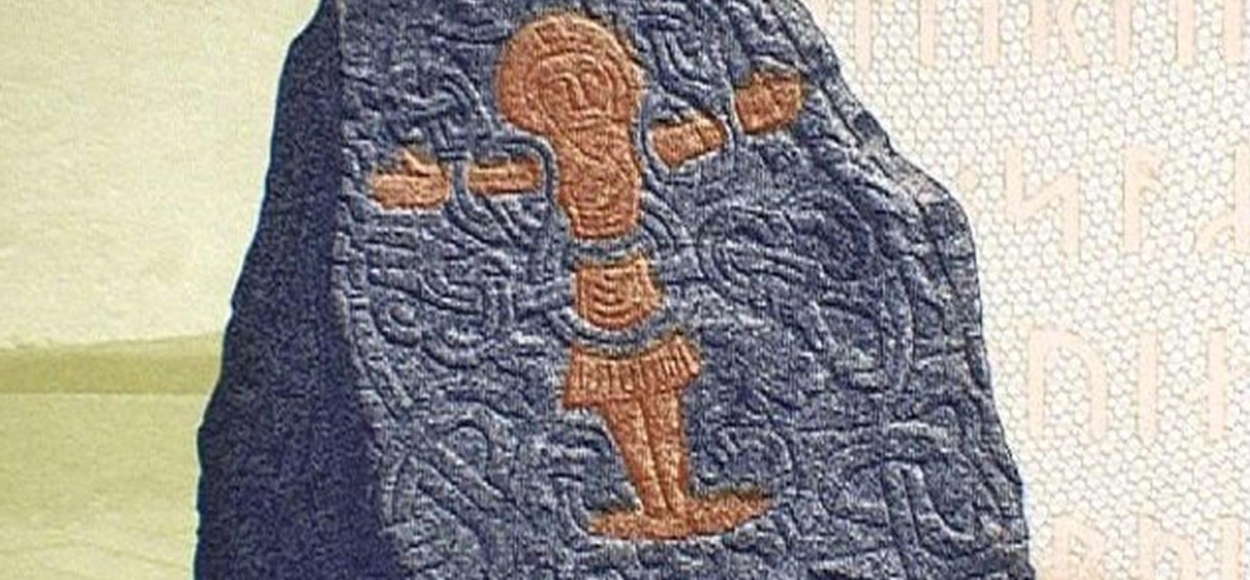
2026 marks the 1200th anniversary of Christianity in Denmark. In the year 826 a Benedictine monk named Ansgar reached Denmark. The transition to Christianity took more than a century and is marked by King Harald I Bluetooth’s runestone in Jelling from around the year 965. It is written here that he converted the Danes to Christianity.
In Denmark the Viking Age lasted from the late part of the Iron Age from around 800 to the middle of the 11th century. The oldest Danish mention of ‘Denmark’ is found on the large Jelling runestone.
Ansgar (801-865) is known as the one who brought Christianity to Denmark and Sweden. He was born in Amiens in France in 801. Ansgar was admitted to the monastery school in Corbie in Northern France, where he was raised for the monastic life.
At the age of 22, Ansgar was sent to the monastery of New Corvey in Lower Saxony. Three years later, he was sent to the North. The Nordic countries were practically the only area where Christianity had not yet been preached in the then known world. The goal was for the gospel to reach the whole known world. But the North was missing. However, there were probably also more political reasons for bringing the church to the North.
The Vikings’ society was cruel. The sense of honour was great, not showing emotions and losing reputation was important. Women who engaged in fornication would be sold as slaves. Slavery was extremely widespread. Flamboyant Nordic chieftains were known for their readiness for violence and almost pathological sense of honour. Loyalty to the lineage and oath to the king and ancestors were also characteristic of society. It is estimated that Denmark had a potential force of around 100,000 warriors.
The Vikings traveled incredibly far during the Viking Age, spreading from the Americas in the west to Central Asia in the east. They reached Newfoundland in Canada, sailed across the Atlantic, plundered and traded along the coasts of Europe, and sailed along the Russian rivers to the Black and Caspian Seas to trade with Constantinople and Baghdad. Magnificent graves of noblemen have been found with riding equipment, swords, axes, shields and decapitated slaves who were to serve their masters in the afterlife.
In 826, the Danish King Harald Klak (785-852) met with Louis the Pious (778-840) in Ingelheim. Harald Klak needed political support in his fight to gain sole control over the Danes. The result of their meeting was that Harald was baptised with his entire family. The abbot of the monastery of New Corvey was now asked if Ansgar could be released from his duties there and join him to Denmark. The abbot recommended this and Ansgar saw this task as the fulfillment of his life’s goal.
We do not know much about Ansgar’s efforts during the first three years in Denmark. They were probably fruitless, not least because of King Harald Klak’s great problems in establishing his kingship. Some Swedish nobles wanted Emperor Louis to preach Christianity in Sweden. Ansgar was called home to the imperial court in Ingelheim and presented with the request, to which he agreed without hesitation. Ansgar understood the journey to Sweden as a call from God and as an act of penance.
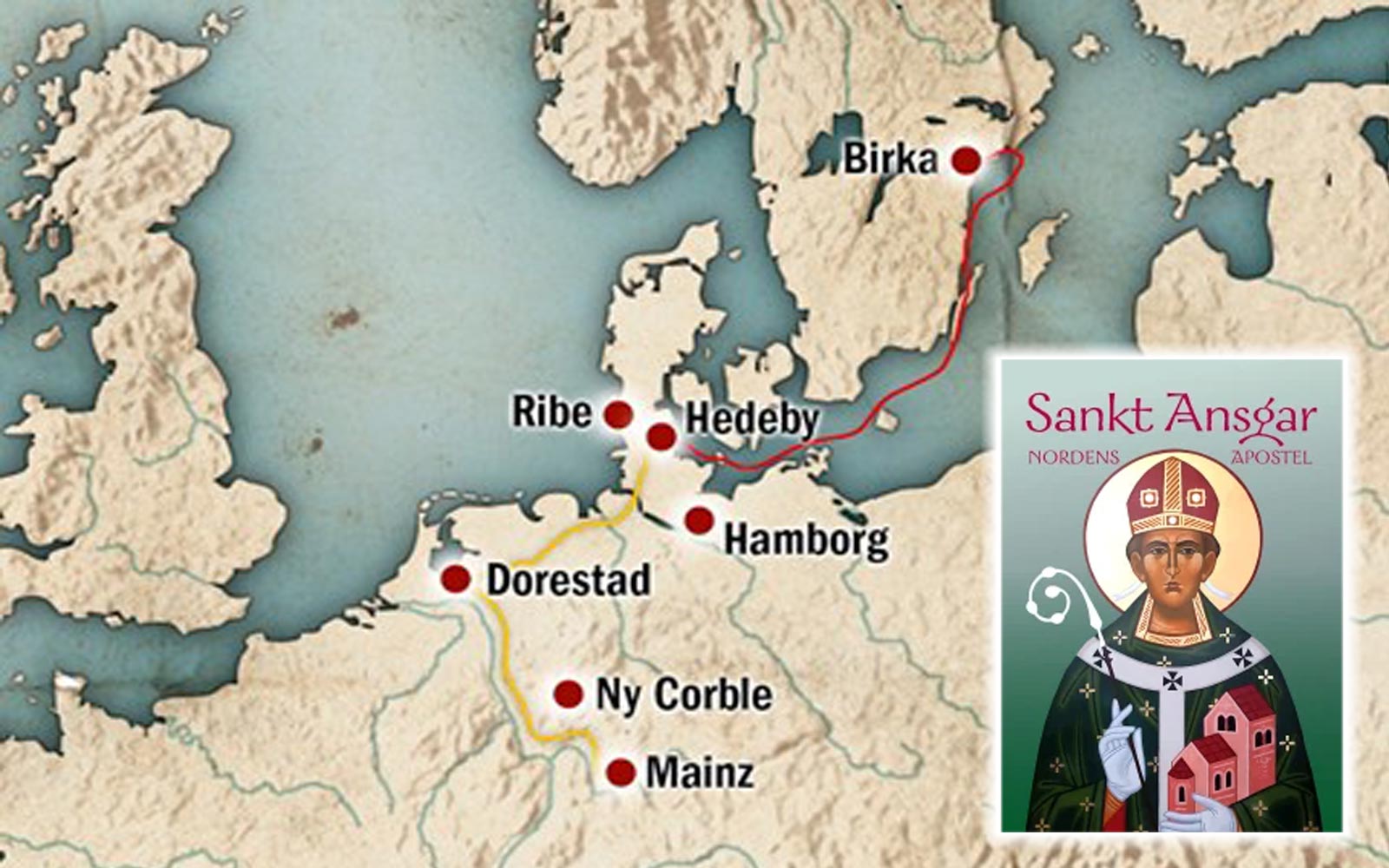
The journey was dangerous. The ship that the emperor had equipped for the journey was attacked. It was impossible to save the ship, and Ansgar lost his liturgical books and other belongings. Finally, Ansgar and his small retinue reached the Swedes’ religious and political center, Birka, on foot. Here, Ansgar’s work was hampered by power struggles and direct opposition to his preaching. But there were also those who listened – not least the Swedish king.
Ansgar now traveled back to Emperor Louis with letters from the Swedish king. And to strengthen the mission in the North, Emperor Louis decided to establish a special archbishopric in Hamburg with the North as its territory.
As archbishop of Hamburg, Ansgar traveled back to both Danes and Swedes. The Danish King Hårik gave him permission to preach, and Ansgar became the king’s confidant. However, he failed to convert Hårik, but Ansgar was allowed to build a church in the Schleswig town of Hedeby (which at that time belonged to the Danish kingdom) around the year 848.
Ansgar was also called to Sweden in a dream. He arrived in Birka. Here he participated in a meeting of the assembly, where it was discussed whether Christianity should be introduced. The result was that Ansgar was now given permission to build a church. A priest was hired to hold services for the Christian merchants there. After these travels, Ansgar died in Hamburg in the year 865. Ansgar was known as a holy man who gave himself to the mission that God had given him.
The 1200th anniversary of the arrival of Ansgar is being commemorated and celebrated in 2026 in Denmark. Together with representatives from several Church Communions, members of the Christiansfeld Moravian Church took part in an ecumenical celebration in Haderslev Catholic Church and in the Lutheran Cathedral. It was a historic day that reminded us that even though we belong to different church denominations, we were united in celebrating the coming of the gospel to Denmark 1200 years ago.
Br Jørgen Bøytler
Minister of Christiansfeld Moravian Church
Editors’ note: the Jelling Rune Stones are not far from Christiansfeld.
More Spotlight News

Life in the West Bank

Sikonge Mission Hospital Update
