

The American Revolution and the Moravian Church
The 250th anniversary of the signing of the United States Declaration of Independence takes place this month and Scott Paul Gordon, Professor and Andrew W. Mellon Chair at Lehigh University looks at the impact of the American revolution on the Moravian Church in Pennsylvania.
The American Revolution shattered the carefully constructed and controlled communities that the Moravian Church had built in colonial America. When the conflict between Britain and its American colonies began, Moravian authorities insisted that congregants should ‘remain still’ and not engage in political disputes. ‘We do not see how a brother could involve himself in such matters’, John Ettwein, Bethlehem’s bishop, declared. This attitude stemmed less from ‘pacifism’ than from a broad reluctance to engage in civic life. Moravians preferred not to serve on juries or in public office, and they tried to avoid resorting to the local legal system. Nor did they join the volunteer military associations that emerged in 1775.
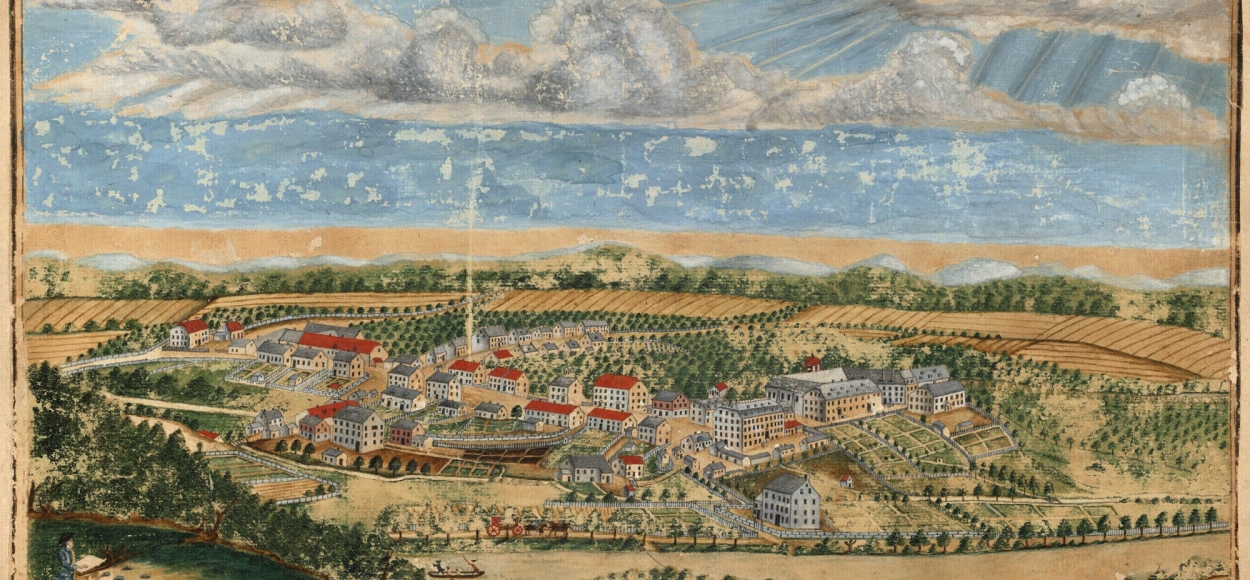
All such activities would divert church members from the spiritual focus that Moravian settlements were designed to foster. Authorities in Bethlehem, founded in 1741, had orchestrated the religious, social, and economic lives of its residents for thirty years. Authorities decided what work congregants undertook and who married whom. Authorities also managed interactions with ‘the world’. Placing a community’s inns and store outside the town insulated its choir houses from unaccompanied strangers, and a Fremdendiener guided curious visitors around the community.
But Moravian authorities could not control what crashed upon Bethlehem in the 1770s. ‘It seemed as though the world would engulf us’, Ettwein recalled. The Continental Army located hundreds of prisoners in Bethlehem, where it placed its General Hospital, too. Smaller hospitals occupied the settlements of Lititz and Emmaus. Moravian authorities objected. But the Continental Army coveted their enormous choir houses and industrial buildings. In September 1777 the army sent 2,000 injured soldiers to Bethlehem, where fewer than 600 people, all Moravians, lived. 120 men were evicted from the Single Brothers’ House, into which 700 patients were crammed. Soldiers, prisoners, officers, doctors, and horses had to be housed, fed, kept warm, and – too often – buried. The community suffered from a ‘general dearth’, a single sister wrote. ‘Everything within the community is earmarked for the soldiers’. There was nobody to deliver what little wood was left.
New laws that Pennsylvania’s revolutionary assembly passed further threatened the community’s survival. The Militia Act required all adult males to join military companies. Nearly all Moravians refused, which did not endear them to their neighbours. But Moravians could avoid the consequences of this refusal by paying fines, which they did. The Test Act, requiring a loyalty oath to the new revolutionary government, was more problematic. Its second version in 1778 authorised patriots to punish those who refused to swear with ‘Banishment of their Persons & Confiscation of their Estates’.
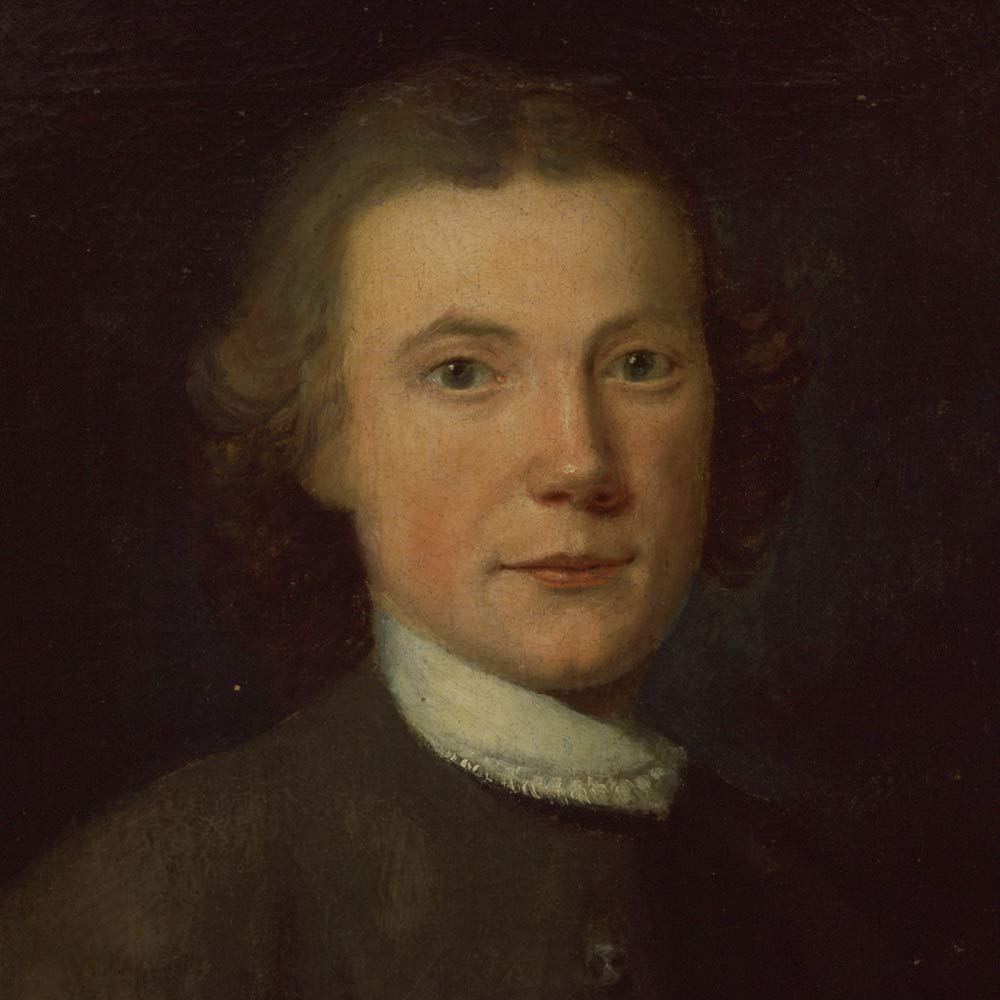
Portrait of John Ettwein
The Moravians’ neighbours, who had long distrusted them, seized the opportunity. Local patriots harassed Moravians throughout Pennsylvania, hauling them roughly, at riflepoint, from their settlements. Some were jailed for months. Lewis Weiss petitioned to exempt Moravians from the Test Act, predicting that, in a short time, ‘the whole Brotherhood may be upon the last Stage of all their Toil and Labour in this Country’. Weiss was blunter to Ettwein: ‘Cruel Neighbours hunger and thirst after your Estates’ and aim at ‘a total destruction of the Brethren’.
Ettwein called on friends in high places to help. Many continental army officers, as we have seen, had visited Bethlehem during the war. So had many delegates of the Continental Congress. They knew, Pennsylvania’s president wrote, that Moravians ‘are not to be feared’. George Bryan informed the local patriots harassing the Moravians that that ‘it is the wish of Government not to distress’ Moravians ‘by calling them … to take the oath at all’. But the threats did not disappear. ‘We have made a sharp Weapon,’ the speaker of Pennsylvania’s Assembly admitted, and ‘mad men have got it into their Hands’. Many Moravians in Lancaster, Lititz, Emmaus, Hebron, and Philadelphia swore the loyalty oath to preserve their lives and property. In Heidelberg all but the pastor capitulated. Most Moravians in Bethlehem, though, managed to avoid violating their consciences, thanks to Ettwein’s skill at parrying the threats.
It is unsurprising that Ettwein viewed the American patriots, not the British, as the oppressive tyrants. Moravians had not looked for change. They had declared their independence in 1741 by establishing their settlement in Pennsylvania’s backcountry, where they would be free to organise social and spiritual lives as they wished. The patriots made this impossible. Once the conflict ended in Pennsylvania, Moravian authorities tried to return things as they had been. Bethlehem’s brothers’ house, cleaned, was reoccupied by the single men in June 1778. A Continental Army doctor wrote to Mary Penry in Lititz: ‘I give you Joy of having your Place restored again to its Primitive Quietness by the removal of so heterogenous & Disorderly a sett of guests as our Soldiers are.’ But it was impossible to restore the status quo ante.
Like other visitors to Moravian settlements, the American Revolution came and went. Moravian leaders thought the shock would be temporary. But the revolutionary idea of self-determination gained a foothold in these communities that had relied on submission and deference from congregants. Many congregants chafed at letting Moravian authorities control their personal or economic lives. Ettwein denounced Bethlehem’s single men who refused to follow the congregation’s regulations as defiant rebels. He was still at war, now with an internal enemy. Lititz’s Single Brothers’ House seemed empty by the 1790s, and Nazareth’s brothers’ house was closed in 1815. In Bethlehem so few single men were willing to submit to congregational regulations that its brothers’ house was reassigned to the girls’ boarding school. And Moravian women, too, asserted themselves. Nazareth’s women began to refuse to wear the traditional head covering, the Haube. Bishop Peter Wolle referred to their refusal as ‘a revolution’.
None of these developments pleased the Moravian Church in Germany, which insisted that American Moravians, like all Moravians, must submit to the discipline of a divinely-led church. (German Moravians wore the Haube until World War II.) But American Moravians, as Paul Peucker has noted, had come to consider themselves ‘citizens with inalienable rights’. They would no longer tolerate a church that exercised control over aspects of their lives that they had come to consider ‘personal’. After many years of agitation, the General Synod of 1857 granted autonomous provincial status to Moravians in America in 1857 – one of the more unexpected consequences of the American Revolution of 1776.
Scott Paul Gordon,
Bethlehem, Pa.
More Spotlight News
The American Revolution and the Moravian Church
A journey to the Moravian Churches in India
